Arthroplasty

Knee Replacement

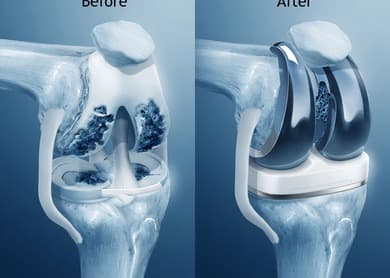
Knee replacement resurfaces a knee that has been worn down by arthritis. It is usually considered when knee pain and stiffness limit walking and daily activity despite non-surgical treatment.

Close view of a person's legs climbing a flight of steps.
02Arthroplasty

What it addresses

What it addresses

Knee replacement is generally considered for advanced arthritis of the knee, when the cartilage is significantly worn and pain or stiffness keeps interfering with everyday movement.

  • Advanced osteoarthritis of the knee
  • Inflammatory arthritis affecting the knee
  • Significant knee deformity from long-standing wear
  • Knee damage following earlier injury

Typical procedures

What the procedure generally involves

The worn surfaces of the knee are replaced with an implant. Depending on which part of the knee is affected, the whole joint or only one compartment may be replaced.

  • Total knee replacement
  • Partial (unicompartmental) knee replacement, where suitable
  • Replacement for a knee with established deformity
  • Assessment from examination and imaging before planning

Approach

Dr. Vikram's approach

Where medically appropriate, non-surgical measures — weight and activity management, physiotherapy, and medication — are considered before surgery is recommended. When a knee replacement is the right step, what it involves and what to expect are explained plainly so the choice is shared.

Recovery

What recovery generally looks like

Guided movement and physiotherapy usually begin soon after surgery and continue over the following weeks. Recovery is gradual and differs between patients depending on general health and rehabilitation. A personal plan and follow-up are arranged for each patient.

Questions

Common questions

General information only. Your own situation is assessed individually during consultation.

Begin a conversation

Have a concern about this? Talk it through.

Describe your symptoms by phone or WhatsApp, and we will help you find the right next step.